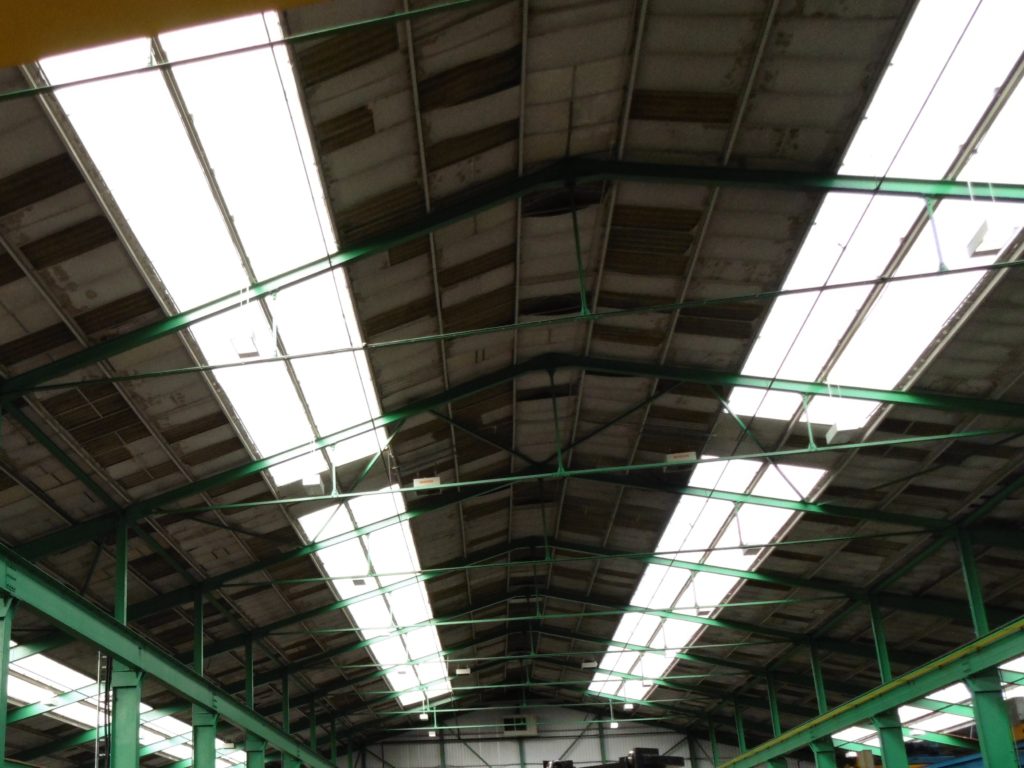
Solar photovoltaic (PV) panels and rooflights both rely on the sun, but they do very different jobs. PV turns sunlight into electricity. Rooflights bring it inside as natural daylight, so the building relies less on electric lights through the working day.
As more roof space goes to PV, daylight can easily become an afterthought. But the two aren’t in competition. Planned together, they get far more out of the roof, both in the energy it produces and in the space it creates below.
Why daylight still deserves a place on the roof
On large-span buildings such as warehouses, factories and distribution centres, most of the floor sits too far from an outside wall for windows to help. The effective daylit area from a window only extends 6m into the space, while rooflights let in three times more light than vertical glazing.
Insulated GRP rooflights can offer up to 60% light transmission. Because GRP diffuses the light, it spreads evenly across the floor without glare, excessive shadow or hot spots. Pair them with automatically controlled lighting and the carbon and cost savings go further.
Rooflights bring in warmth as well as light. On a clear winter’s day, solar gain through the rooflights can even reduce how much heating the building needs.
You can see daylighting at this scale at the Lidl regional distribution centre in Belvedere, Kent, where over 2,600 linear metres of our Monarch F GRP barrel vault rooflights were installed as part of a major refurbishment.
What daylight does for people working inside
Energy is only part of the story. Daylight changes over the course of the day, and that link with the outside world helps keep people’s body clocks on track. It also helps with alertness and concentration, which matters on any shift.
Workplaces with good daylight are linked to better staff retention and lower absenteeism, and enough daylight over time is believed to benefit long-term wellbeing. Building owners benefit too, with good daylighting linked to higher asset value and better use of space.
Not all of this is as easy to measure as an electricity bill, but it still belongs in the conversation when the roof is being planned. We’ve covered the wider benefits of natural daylight in a separate guide.
How much roof area do rooflights need?
According to The Rooflight Association’s research, rooflights covering 10–20% of the roof area typically provide effective daylighting in non-residential industrial and commercial buildings, while still leaving space for PV. That’s a sensible starting point, but the right figure for your building will come down to:
- what the space underneath is used for
- where the rooflights are placed
- what else has to fit on the roof, including the PV array itself
Why rooflights need to be planned in early
In large-span buildings, how well a space is daylit comes down to two things: how much of the roof is given over to rooflights, and where they go. If daylight is left until the PV layout and other rooftop equipment positions have been planned, the options narrow quickly.
Bringing rooflights into the design at the same time as PV lets architects, specifiers and roofing contractors make full use of the roof. It also means the roof is designed around the building and the people who use it from day one.
Our complete range of GRP rooflights is available on NBS Source, so you can specify the most project appropriate Filon rooflight solution straight into your project.
Getting the most from the roof
A well-planned roof does three jobs at once. It generates electricity, it reduces the need for electric lighting and it gives people a better place to work. Designing PV and rooflights together from the start is how you get all three.
Planning a roof with PV? Talk to our team early and we’ll help you find the right rooflight solution for the building and the people inside it.
FAQs
Can rooflights and solar panels go on the same commercial roof?
Yes. With both planned in from the start, rooflights and PV can share the roof. Leaving rooflights until after the PV layout is fixed limits where they can go and how much daylight they can deliver.
How much of a roof should be rooflights?
The Rooflight Association’s research points to 10–20% of the roof area for effective daylighting in industrial and commercial buildings. The right figure depends on what the space is used for, where the rooflights sit and what else has to fit on the roof.
Do rooflights still make sense on a building with solar PV?
Yes. PV generates electricity, while rooflights reduce how much of it is needed for lighting during the day. Daylight also benefits the people working inside, which PV can’t do.